Herbicide Notice
The Pendleton School District Facilities will be applying an herbicide treatment across the district to all lawns, ornamentals, and sports fields the week of March 23-27, 2026.

The Pendleton School District Facilities will be applying an herbicide treatment across the district to all lawns, ornamentals, and sports fields the week of March 23-27, 2026.

McKay Creek Elementary students worked hard on their songs and music for their Holiday Concert, which they were happy to perform for their families in December. Check out their great voices and cheer!
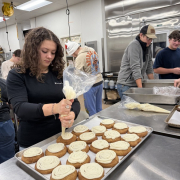
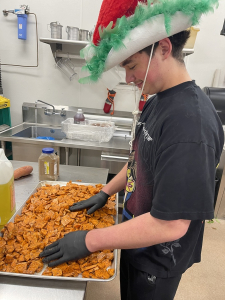
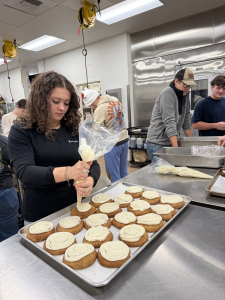
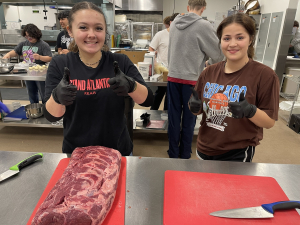
Students in the Pendleton High School Culinary Program have been busy preparing holiday food this month.
They recently made baked goods for a bake sale for employees of the Eastern Oregon Correctional Institution (EOCI). Creations included cookies, brownies, Swiss rolls, and cinnamon rolls.
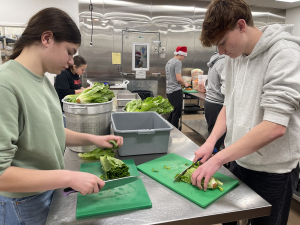
Then they prepared dinner for the EOCI Employee Christmas Party for about 120 people on December 12, 2025. The menu was homemade dinner rolls, Caesar salad with homemade croutons, apple harvest salad with roasted sweet potatoes, macaroni and cheese, potato dish, maple and cumin glazed roasted carrots, grilled New York steaks, and chicken thighs. Kaden Clark, PHS Food Teacher, said he is letting the students choose what to make for dessert.
Clark said he wants students to feel confident about preparing food for a large group. “Sometimes, catering events or preparing food for a large group can be intimidating, so I want them to feel good about their skills in the kitchen. I know they can do it,” Clark said. He also wants them to understand how much planning and labor go into preparing food, as well as the business side of it.
Jasmine, PHS Senior, was helping prepare the homemade dinner rolls for the EOCI dinner. She said she enjoys the teamwork of preparing food. Senior Sophia said she likes the thrill of having to get everything done in a timely manner.
Another student in Foods IV, PHS Senior Cole, was cutting carrots for roasting. He said he has learned quite a bit about the business side of the food industry, like if you mess up a big order, that’s a lot of time and money lost. But his biggest takeaway? “I enjoy making the food and especially eating the food.”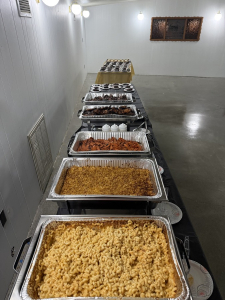

What a wonderful night of music! 🎶 Families and friends gathered to enjoy the Winter Instrumental Concert and celebrate the talent and hard work of our Sunridge Middle School musicians. Thank you to everyone who joined us and helped make the evening so special.
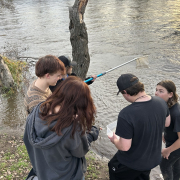
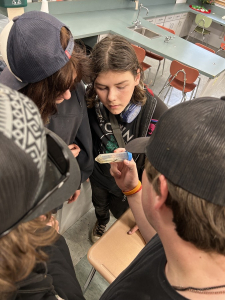
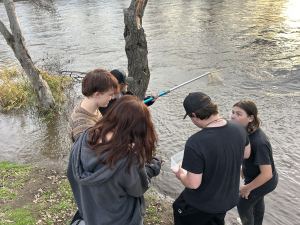
Students in a science class at Hawthorne Alternative High School are enjoying some hands-on learning at the Umatilla River this semester.
According to Andrew Sneed, Science Teacher, the students visit the Umatilla River multiple times and collect macroinvertebrates. They then quantify and classify each species. “With our collected data at the end of the semester, we will calculate the biodiversity index of macroinvertebrates in the river,” Sneed said.
A macroinvertebrate is a large (visible to the naked eye) invertebrate (animal without a backbone) that lives in or near water, such as insects, snails, crayfish, and worms. Macroinvertebrates serve as a key indicator of aquatic ecosystem health because their presence and types reflect water quality.
In December, students used nets to collect samples, then sorted and collected the macroinvertebrates. The following day, they used a macroinvertebrate field guide to classify and quantify the samples. At the end of the semester, student groups will create a poster that shows the biodiversity index equation and a graph to show the level of biodiversity in the river.
Sneed said students really enjoy and look forward to going to the river. “It gives them hands-on experience and interaction within their own ecosystem and how seasonal changes affect different species. A big takeaway we talked about in December is how water temperatures affect the abundance of different species compared to collections during warmer seasons of the river.”